In a vehicle, power is never free. Every watt drawn by electronics costs fuel or driving range, every wire adds weight, and every ECU that stays awake while the car is parked drains the battery. Multi-Gig networks must therefore be not only fast, but frugal. This article covers four technologies that make that possible: Power over Data Lines, Energy-Efficient Ethernet, network sleep/wake, and PHY-level diagnostics.
Key takeaways
- PoDL (IEEE 802.3bu) delivers DC power over the same single pair that carries data, eliminating separate power wires for sensors.
- Energy-Efficient Ethernet lets PHYs enter low-power idle when there is no traffic.
- Sleep/wake over the data line (OPEN Alliance TC10) powers down whole links and ECUs while parked and wakes them in milliseconds.
- Built-in diagnostics — signal quality indicators and cable tests — enable predictive maintenance.
Power over Data Lines (PoDL)
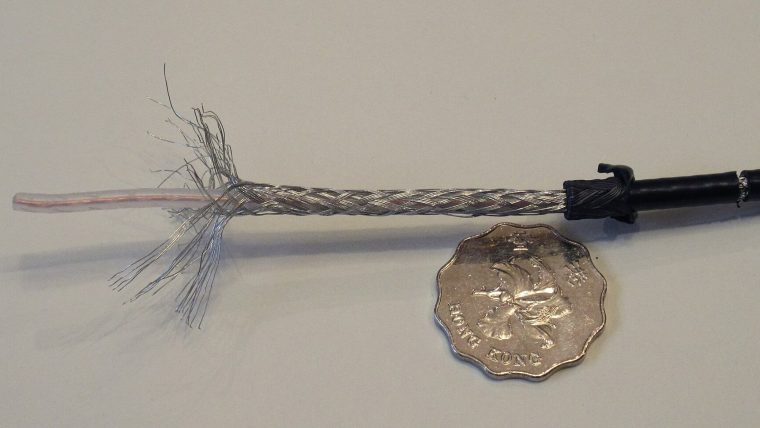
Power over Ethernet (PoE) is familiar from office networks, where it powers phones and access points over four-pair cabling. Automotive single-pair links use a different scheme: IEEE 802.3bu, Power over Data Lines, superimposes DC power on the single data pair. Coupling inductors at each end separate DC from the high-frequency data signal, and capacitors block DC from the PHY. PoDL defines power classes for nominal 12 V and 24 V systems (and others), plus a detection and classification procedure so power is applied only to compatible devices.
For cameras and remote sensors, powering over the data cable removes a power wire and a connector pin, saving weight and cost and simplifying the harness. The challenge at Multi-Gig speeds is the coupling network: inductors must present a high impedance across a very wide frequency range so they do not degrade the data channel. Integrated solutions and careful component selection are essential. NAV Alliance TWG1/TWG2 explicitly included PoDL requirements in its 25G/50G use-case analysis.
Energy-Efficient Ethernet (EEE)
An Ethernet PHY that keeps transmitting idle symbols at full rate wastes energy. Energy-Efficient Ethernet allows link partners to agree to enter a low-power idle state when there is no data, periodically refreshing the link to keep receivers trained, and to return to full operation within microseconds when frames arrive. For bursty traffic — sensor frames separated by gaps, periodic control messages — EEE can significantly reduce average PHY power. IEEE 802.3ch includes optional EEE for 2.5/5/10GBASE-T1, and the NAV Alliance promotes EEE for asymmetrical camera links where heat in the camera module matters.
Sleep and wake-up over the data line
When a car is parked, most of its electronics must sleep, drawing microamps — yet some functions (keyless entry, alarm, telematics, charging management) must be able to wake the network. CAN has long supported selective wake-up. For automotive Ethernet, the OPEN Alliance TC10 specification defines how a PHY can sleep with the link down and be woken by its link partner over the same data line, and how ECUs coordinate a network-wide sleep. Wake-up must be fast — link up within tens of milliseconds — so that a door opening or a remote command feels instantaneous.
NAV Alliance TWG5, System Controls and Management, lists wake-up and sleep among the considerations for its automotive network management protocol, alongside enhanced diagnosis, predictive maintenance, redundancy, Quality of Service and device management.
Partial networking in a zonal architecture
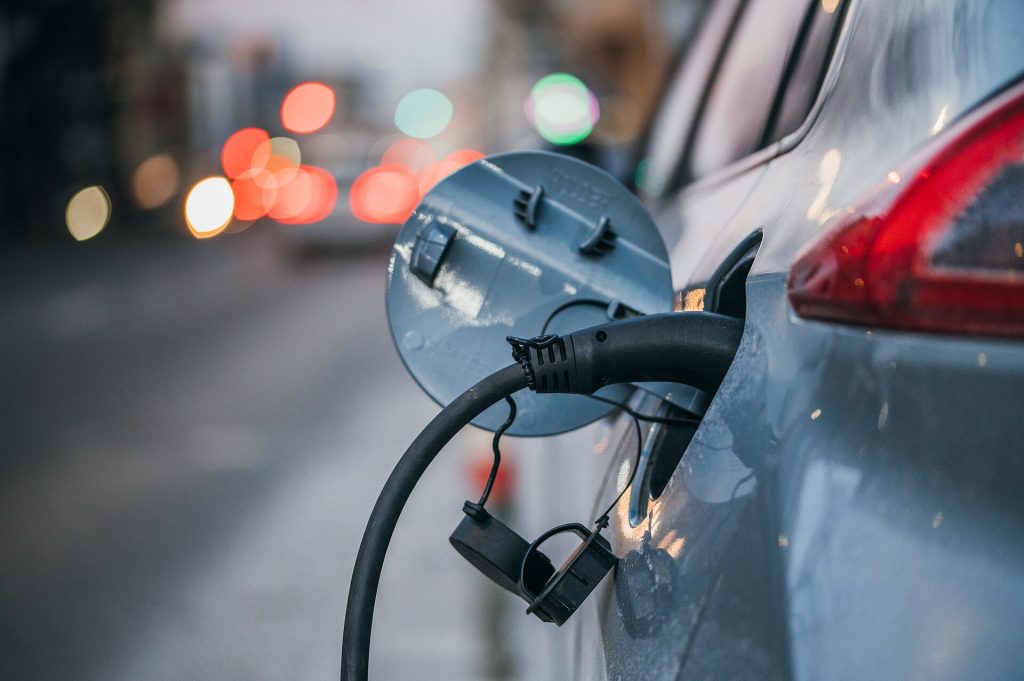
In a zonal architecture, power management becomes more flexible: zone controllers can keep only the links and devices needed for an active function awake. For example, during AC charging an electric vehicle may need its battery management, charging interface and telematics active, but none of the perception sensors or the central AI computer. Coordinated sleep/wake of Ethernet links and PoDL-powered devices enables these partial-network states.
Diagnostics for predictive maintenance
A network that will run for fifteen years needs to report its own health. Automotive PHYs provide diagnostics such as:
- Signal Quality Indicator (SQI) — an estimate of link margin derived from the receiver’s internal signal-to-noise measurements. A slowly decreasing SQI warns of a degrading cable or connector before errors occur.
- Cable tests / time-domain reflectometry (TDR) — detecting opens, shorts and their approximate distance from the PHY.
- Error counters — FEC-corrected and uncorrectable errors, link-down events.
- Temperature and power monitoring — for thermal management and fault analysis.
Collected through the network management protocol and reported via telematics, these diagnostics let OEMs schedule repairs proactively, reduce no-fault-found replacements in workshops and improve future designs. NAV Alliance TWG3 includes diagnosis of a Multi-Gig link segment in its integration work.
| Technology | Standard / spec | Main benefit |
|---|---|---|
| Power over Data Lines | IEEE 802.3bu | Fewer wires, lighter harness |
| Energy-Efficient Ethernet | IEEE 802.3 (optional in 802.3ch and others) | Lower average PHY power and heat |
| Sleep/wake over data line | OPEN Alliance TC10 | Low quiescent current, fast wake-up |
| Link diagnostics | PHY features (SQI, TDR), management protocols | Predictive maintenance, faster repairs |
Design recommendations
- Budget power per link, including PHY, PoDL losses and MACsec, for each operating mode (driving, parked, charging).
- Enable EEE where traffic is bursty and latency requirements allow.
- Define partial-network states early and map them to link sleep/wake capabilities.
- Validate wake-up time over temperature and with worst-case harnesses.
- Expose PHY diagnostics to the vehicle’s health monitoring from day one.
Frequently asked questions
Is PoDL the same as Power over Ethernet?
Both deliver power over data cabling, but PoE targets multi-pair enterprise cabling, while PoDL is defined for single-pair Ethernet and automotive/industrial voltages.
Does EEE add latency?
Waking from low-power idle takes microseconds. For most automotive traffic this is negligible; latency-critical streams can keep EEE disabled.
Where can I learn the basics first?
Start with What is Multi-Gig Automotive Ethernet? and our glossary.
Updated November 2026.