Why the car needs Multi-Gig Ethernet
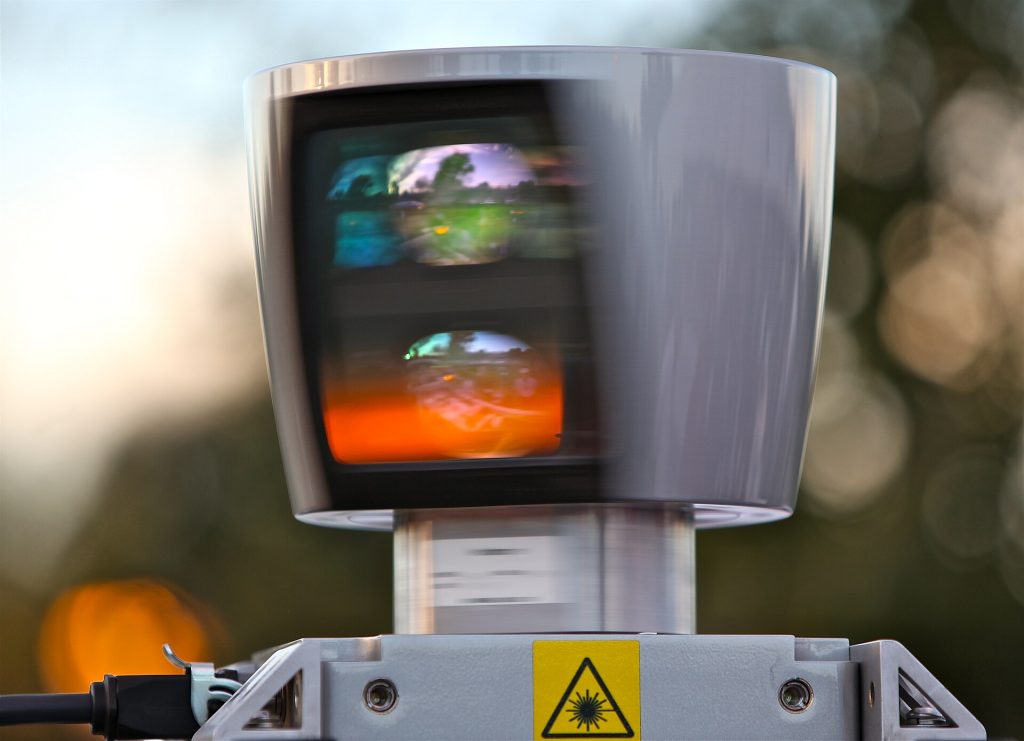
A vehicle capable of automated driving combines many high-resolution cameras with radar, lidar and ultrasonic sensors, central AI computers, storage, displays and over-the-air connectivity. Each high-resolution camera alone can produce several gigabits per second of raw data, and redundancy requirements double critical paths. Classic in-vehicle buses — CAN at up to a few Mb/s, FlexRay at 10 Mb/s — and even 100 Mb/s or 1 Gb/s Ethernet cannot carry this load.
Multi-Gig Automotive Ethernet brings data-center bandwidth into the car while meeting automotive constraints: single-pair or coaxial cabling to save weight, strict electromagnetic emission and immunity limits, an operating range from −40 °C to over 105 °C, low power, functional safety and fifteen-plus-year lifetimes.
- 2.5, 5 and 10 Gb/s over a single pair — IEEE 802.3ch
- 25, 50 and 100 Gb/s electrical PHYs — IEEE 802.3cy
- Asymmetrical links for cameras and sensors
The Automotive Ethernet speed ladder
Each generation was standardized in IEEE 802.3 with automotive-specific requirements. Multi-Gig — everything above 1 Gb/s — is the NAV Alliance focus.
| PHY | Data rate | IEEE standard | Medium | Typical use |
|---|---|---|---|---|
| 10BASE-T1S | 10 Mb/s (shared) | 802.3cg (2019) | Single unshielded pair, multidrop | Sensors/actuators at the edge, CAN/LIN replacement |
| 100BASE-T1 | 100 Mb/s | 802.3bw (2015) | Single unshielded pair | Body, infotainment, diagnostics |
| 1000BASE-T1 | 1 Gb/s | 802.3bp (2016) | Single pair | Domain/zonal links, compressed cameras |
| 2.5/5/10GBASE-T1 | 2.5–10 Gb/s | 802.3ch (2020) | Single shielded pair, up to 15 m with 4 inline connectors | Backbones, compute interconnect, cameras, storage |
| 25/50/100GBASE-T1 | 25–100 Gb/s | 802.3cy (2023) | Single shielded pair | Zonal backbone, central compute, high-res sensors |
| 2.5–50GBASE-AU | 2.5–50 Gb/s | 802.3cz (2023) | Multimode glass optical fibre | EMC-critical or long links |
| Asymmetrical Ethernet | Multi-Gig one way, low rate back | P802.3dm (in development) | Single pair / coax | Cameras, radar, lidar, displays |
Building blocks of the NAV network
Asymmetrical sensor links
Gigabits upstream from cameras and sensors, a low-rate control channel downstream, plus Energy-Efficient Ethernet. Learn more
Zonal backbone
Zone controllers aggregate local devices and connect to central compute over 10–50 Gb/s links. Read the article
Deterministic delivery
TSN time synchronization, scheduling and redundancy make Ethernet safe for control loops. Read the article
EMC robustness
Channel, connector and PHY design that meets emission limits and tolerates RF ingress. Read the article
Security by design
MACsec, secure boot, firewalls and intrusion detection in line with ISO/SAE 21434. Read the article
Power & diagnostics
Power over Data Lines, sleep/wake and built-in cable diagnostics for predictive maintenance. Read the article
Size your camera links
Our interactive calculator turns resolution, frame rate, bit depth and compression into a required data rate and suggests the matching Automotive Ethernet speed grade.